Excursions
Summer term 2026

Guided Tour of the Botanical Collection at the Karlsruhe
Natural History Museum
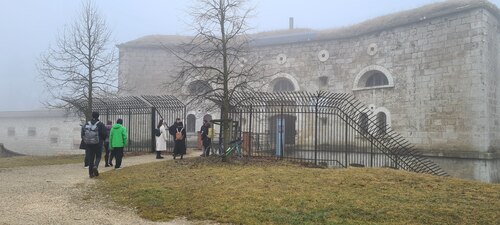
On July 22, 2026, the graduate seminar on the history of science led by Désirée Schauz took an excursion to the Rhine Harbor, where the botanical collection of the Karlsruhe Natural History Museum is currently housed. The herbarium comprises more than 580,000 specimens of lichens, mosses, fungi, ferns, and flowering plants from all continents. The oldest specimens date back to the early 18th century. Collection’s chief curator, ethnobotanist Rainer Bussmann, provided insight into the eventful history of this significant collection, which is the result of countless research expeditions, exchanges, and donations. He described the challenges involved in collecting, organizing, and preserving the material, as well as its significance for current research questions regarding biodiversity and long-term changes in the plant world. Using selected examples, he explained how political and, for a long time, colonial conditions continue to influence the use and global distribution of cultivated plants to this day. In this context, Bussmann also addressed the issue of the rights of indigenous peoples and their knowledge of crop plants, a topic that has increasingly occupied the field of ethnobotany in recent years.
In the Treasuries of the General State Archives in Karlsruhe
On June 30, as part of the research colloquium led by PD Dr. Désirée Schauz and Prof. Dr. Marcus Popplow, an excursion was held to the State Archives in Karlsruhe. Today, the State Archives is responsible for the documents of the state authorities and courts of the Karlsruhe administrative district. However, it also houses historical sources from the Margraves of Baden, archival materials from the bishops of Speyer and Konstanz, as well as records from many former monasteries, to name just a few divisions.
Dr. Jennifer Meyer guided the group through the archive. The students learned, for example, how many different stairwells were used in the past. There was a grand stairwell for the archive director, another for the employed archivists, and a third for the director’s staff. In addition, the participants were able to examine the so-called “emergency boxes.” These were large wooden boxes labeled with capital letters. In emergencies, archival materials could be stored inside them and saved. Another very interesting part of the tour was the visit to the reading room and the discussion of retention periods. Normally, documents held in the archives may only be viewed and used after 30 years. For files related to a natural person, the rules are even stricter. Such archival records may only be viewed once 10 years have passed since the person’s death. In cases where the person’s date of death is unknown, the file may be accessed 90 years after the date of birth. There are certainly exceptions to the rules governing retention and access restrictions, but these must be reviewed on a case-by-case basis.
Another highlight was the visit to the restoration workshop. There, the institution’s restorer, Bettina Heck, presented visitors with selected archival items that she is preserving from deterioration. The participants in the research colloquium not only learned how to save historical books from ink corrosion but also that mold can be contained but never completely eliminated. It was also very enlightening to learn that archival materials must be restored in such a way that it is clearly evident that repairs have been made to the items—for example, through color variations.
On behalf of the research colloquium, we would like to extend our heartfelt thanks to Jennifer Meyer and Bettina Heck for providing insight into their daily work and the General State Archives.
Magdalena Pfeiffer
Summer term 2025
Excursion to prosthetics manufacturer in Karlsruhe
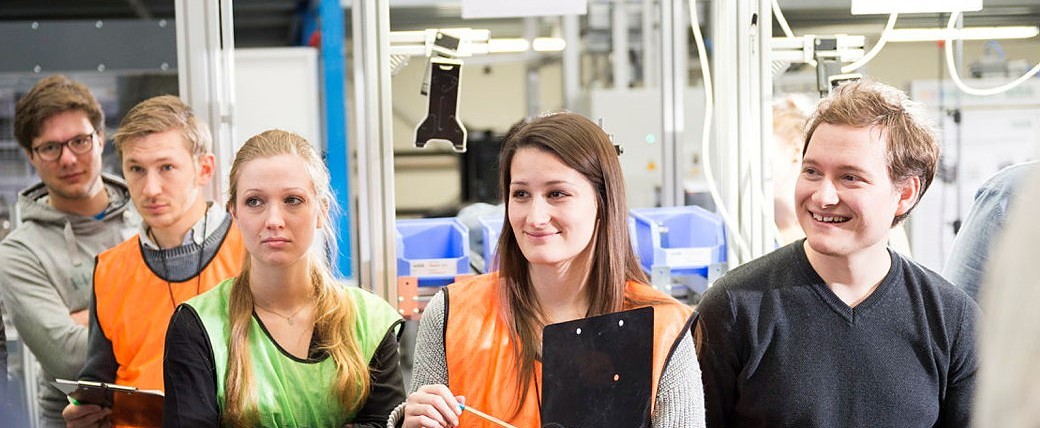
As part of the seminar "From prosthesis to cyborg - body and technology" organized by Désirée Schauz, an excursion to the Karlsruhe-based prosthesis manufacturer Vincent Systems took place on 30 July 2025. During the company tour, the participants were given a comprehensive insight into the current development trends in high-tech hand prostheses.
Guided tour of the exhibition at the Badisches Landesmuseum
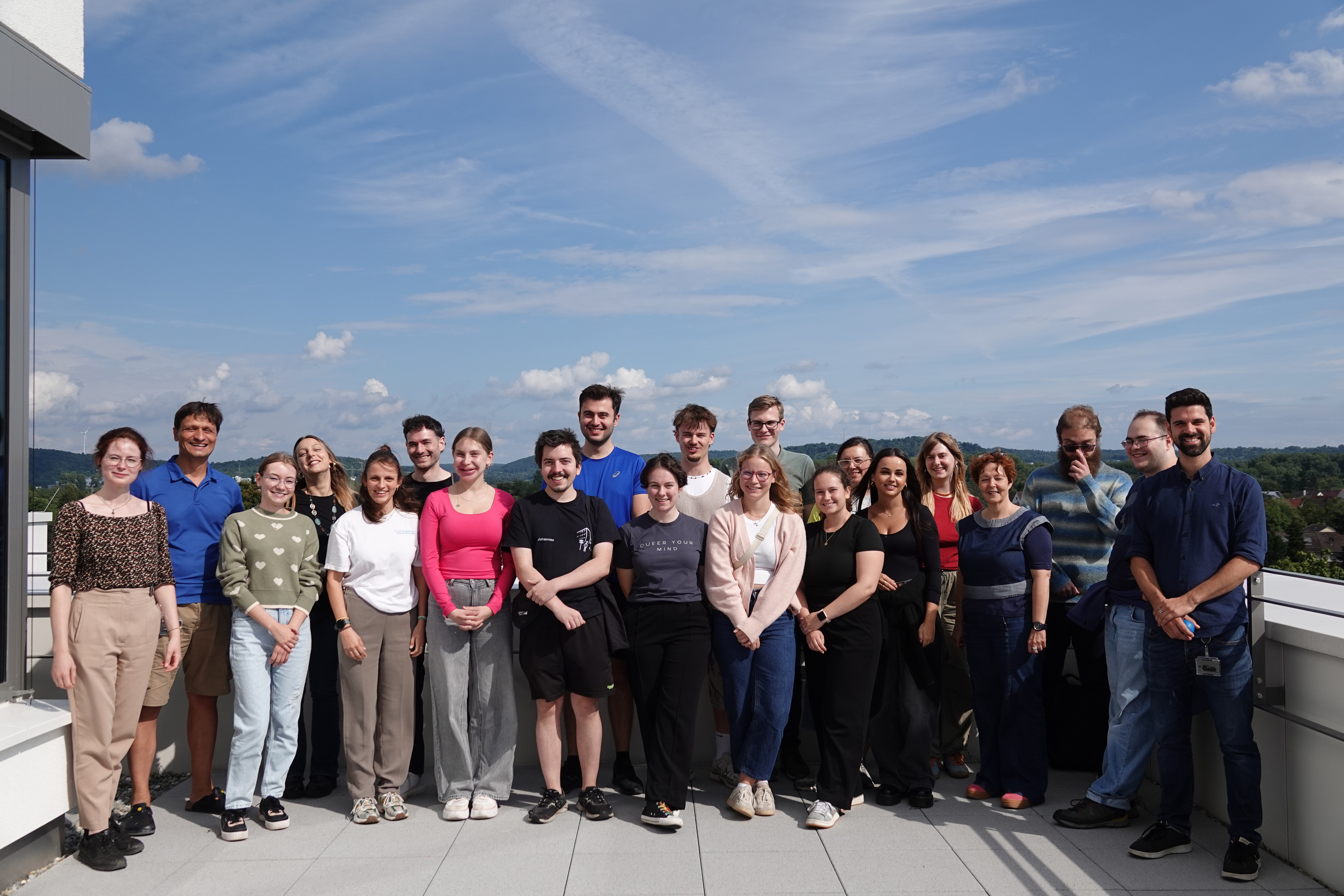
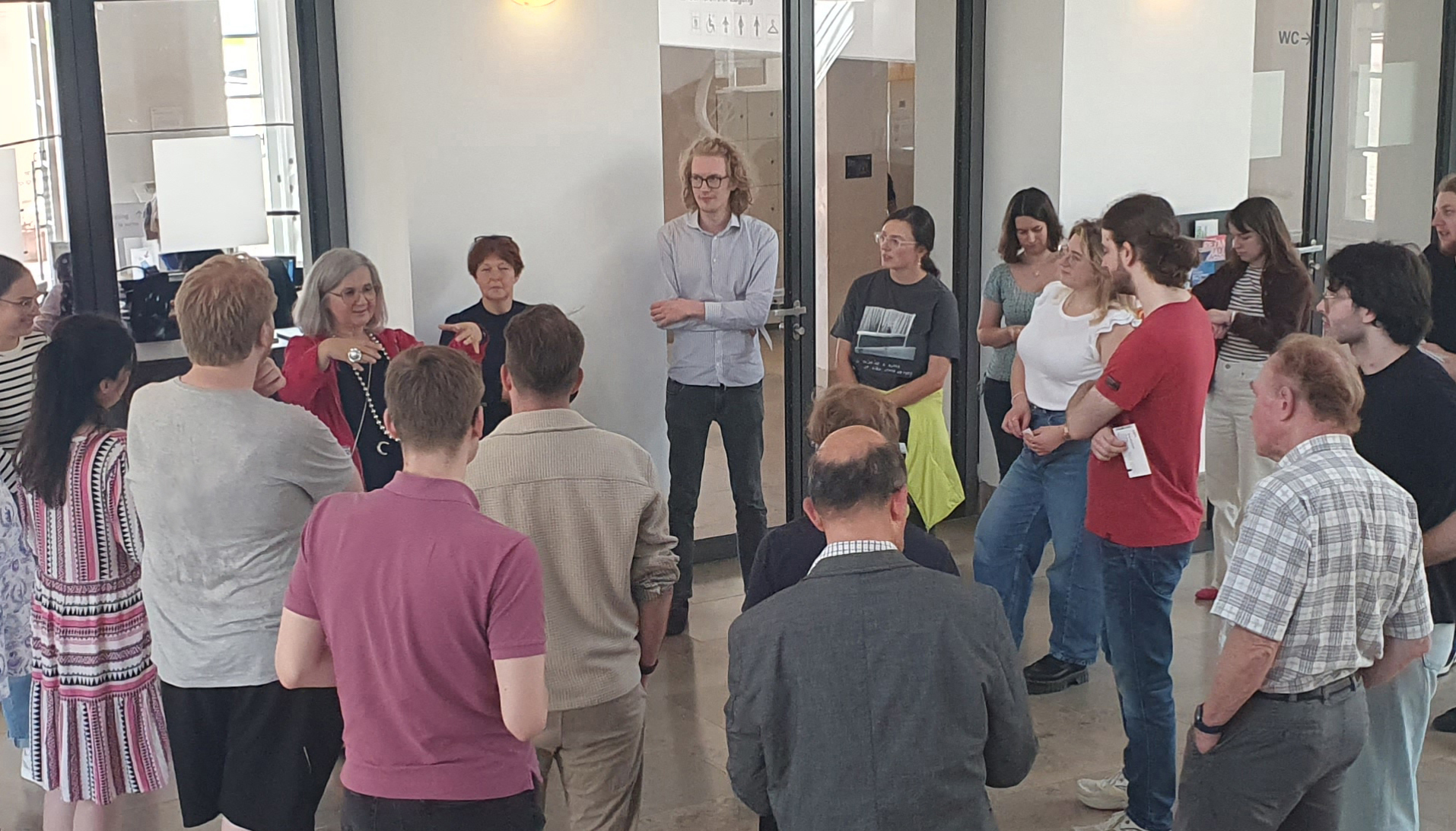
On July 29, 20 students from the EUKLID degree program joined Désirée Schauz and Marcus Popplow on a guided tour of the special exhibition "Injustice & Profit. The Baden State Museum under National Socialism" at Karlsruhe Palace. Using numerous exhibits from the museum's collection and meticulously researched facts, they were able to see for themselves the meticulous work of the exhibition organizers, which focuses on the museum's reappraisal of its Nazi past.
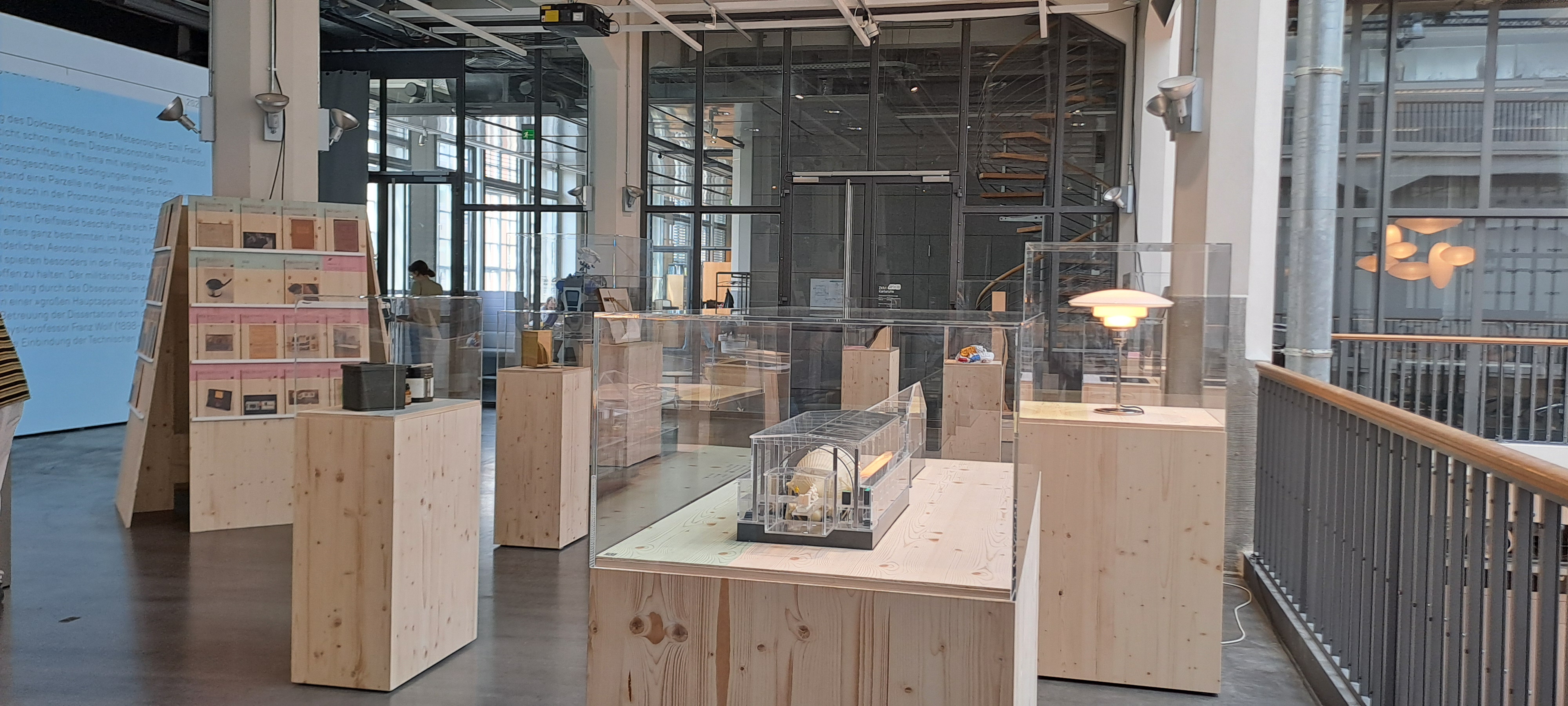
Excursion to 100 objects from the history of KIT
As part of Marcus Popplow and Désirée Schauz 's research colloquium, the seminar participants went to the Karlsruhe Center for Art and Media (ZKM ) for an informative tour of the exhibits and history of the exhibition "200 Years of KIT | 100 Objects. Parts of the Whole". Klaus Nippert, KIT archivist, Andrea Stengel and Anton F. Guhl curated the exhibition. We learned exciting, curious and historical facts about the conception and development of an exhibition that reflects the 200-year history of KIT, which is celebrating its anniversary this year. The exhibition can be viewed on site and in digital form via this link until October 19, 2025.
Winter semester 2024/25
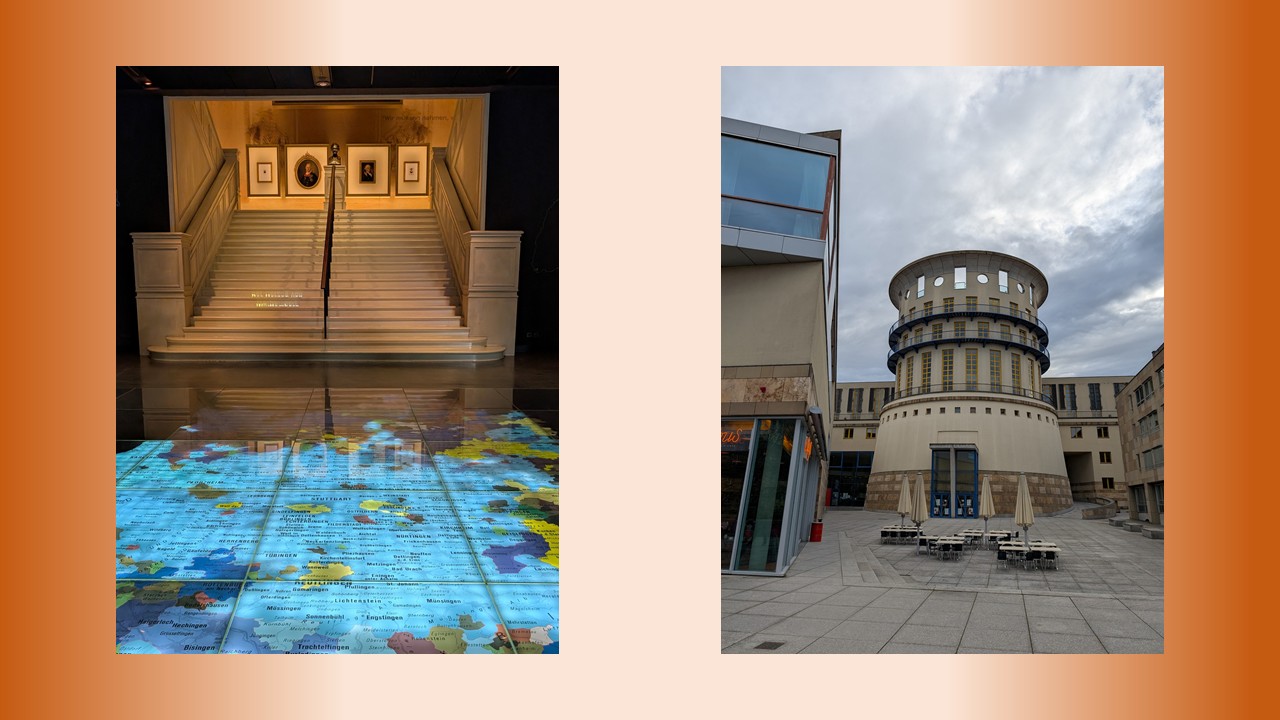
Excursion to the Haus der Geschichte, Stuttgart (25.01.2025)
On January 25, 2025 Andrea Acle-Kreysing visited the Haus der Geschichte in Stuttgart together with the students from her seminar:
"As part of the permanent exhibition, we specifically looked for objects that symbolically illustrate the historical and social background to migration.
Among the most impressive exhibits were "hunger breads", which were baked from all kinds of ingredients except flour. These were a reminder of the drought of the early 19th century, which, together with the Napoleonic Wars, led to many people emigrating from the region. The history of regiments in the American Civil War, which were formed from political exiles from Baden-Württemberg after the revolutions of 1848, also provided fascinating insights.
Other objects illustrated the experiences of flight and expulsion from the National Socialist era to the 1950s, when the region finally became a center of attraction for immigrants. Particularly impressive was the presentation in oversized suitcases, which told the stories of people from Ukraine, Iran, Turkey, Germany and other countries with personal items and memorabilia, illustrating migration experiences from both the 19th and 20th centuries.
Another highlight was a board game on the topic of migration, which used real examples and personal life stories (e.g. of highly qualified professionals, political dissidents, underage refugees and low-skilled immigrants) to show that integration depends not only on personal will, but also to a large extent on the institutional and structural support services available to immigrants.
We would like to thank our dedicated guide, Mr. Vidačković, for his lively and insightful explanations during the tour and workshop. We would also like to thank the GeistSoz student council for the financial support that made this excursion possible. We can warmly recommend a visit to the Haus der Geschichte to everyone."
Summer semester 2024
Excursion to the "working museum"
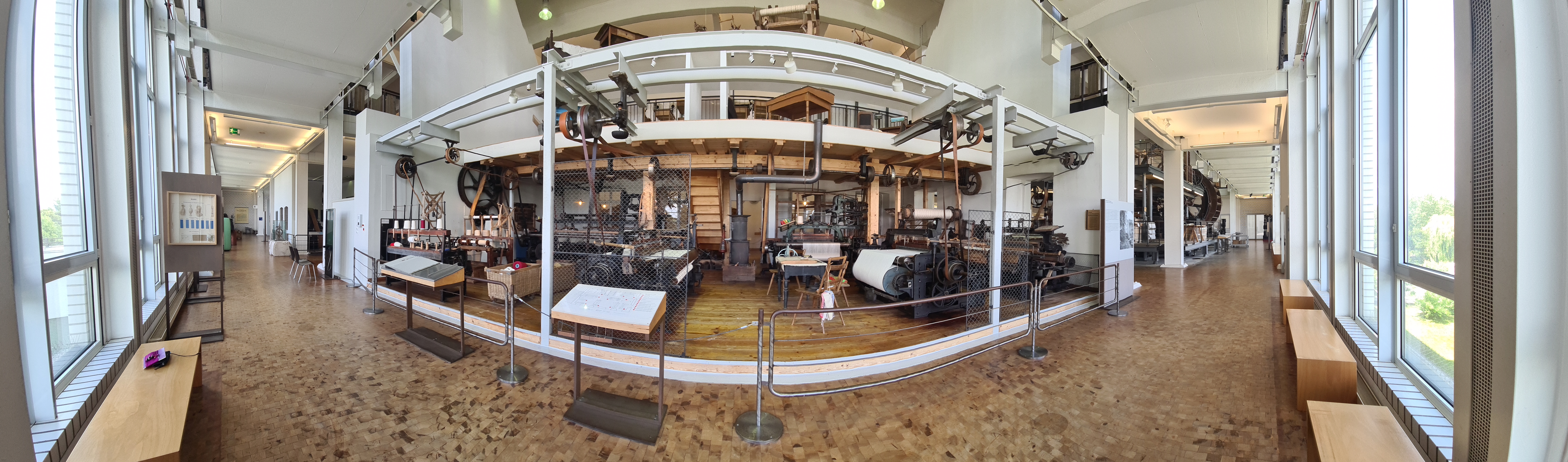
Technoseum Mannheim (detail: weaving mill from Elzach)
On June 15, 2024, we visited Sophia Merkel with participants of the seminar "Textile history between technology and consumer history" and interested students visited the Technoseum in Mannheim.
Sabine Hüttner, demonstration technician, gave a guided tour of the museum's diverse exhibits, which illustrated textile production. The participants were able to operate various exhibits such as spinning wheels and looms themselves and try out what had been discussed in the seminar and experience the physical demands of the various devices. One of the highlights was the demonstration of a faithfully reconstructed weaving mill, operated in the 19th and 20th centuries by the Störr family from Elzach (see photo). Driven by a water wheel, the seven looms, among other things, showed the great noise pollution and dangers to which the people working in the weaving mill were exposed.
We would especially like to thank Sabine Hüttner for the informative and exciting demonstration and the Geistsoz student council for the financial support.
Excursion to the Linden Museum, Stuttgart
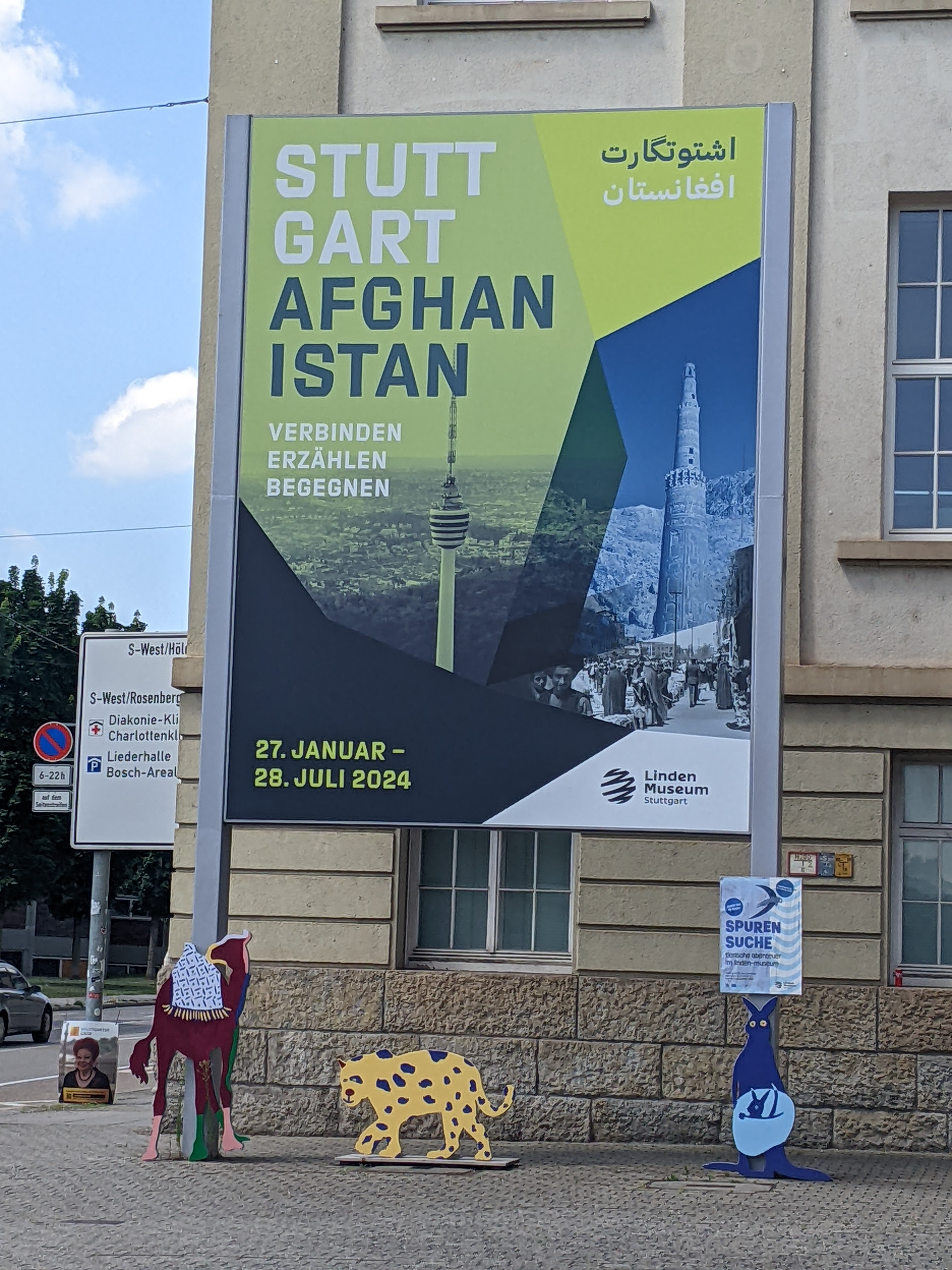
On July 20, 2024, Andrea Acle-Kreysing and the participants of her seminar visited the exhibition *Stuttgart-Afghanistan* at the Linden-Museum in Stuttgart, which deals with the dynamics of knowledge exchange and cultural mediation. During the tour, Ms. Hüge gave us a fascinating insight into numerous historical objects, works of art and everyday objects.
We were particularly impressed by the involvement of people from the Stuttgart region who have a personal connection to Afghanistan in the preparation of the exhibition. Their contributions in the form of memories, thoughts and loans enriched our view and created a valuable link to the present. We also appreciated how the exhibition offered a new perspective on a German research expedition to Afghanistan in the 1960s by including actors from both countries.
We would like to thank the GeistSoz student council for their financial support and our wonderful museum guide, Ms. Hüge!
WS 2023/24
Excursion to the Oberer Kuhberg concentration camp memorial site