News

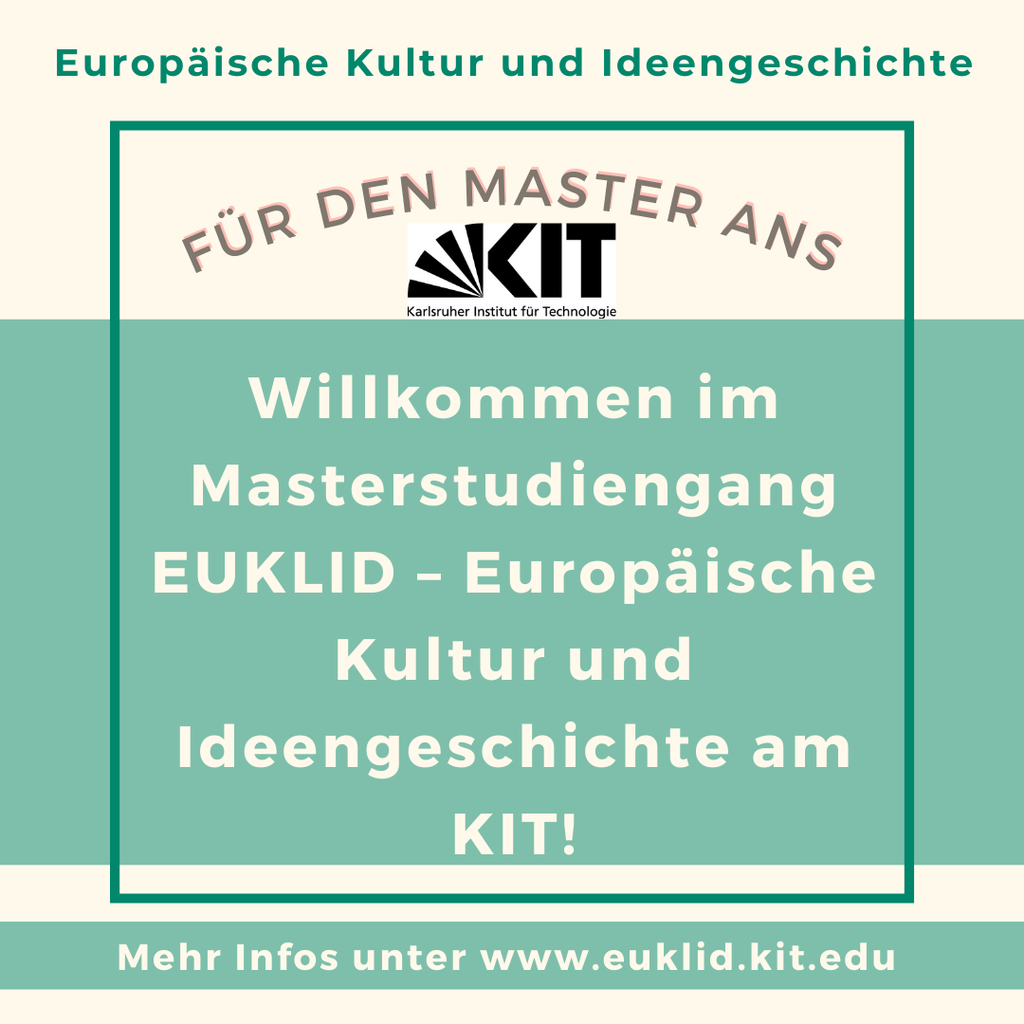
You have completed your Bachelor's degree and would like to deepen your history studies - interdisciplinary, practical and with a lot of creative freedom? Then the EUKLID Master's degree program at the Karlsruhe Institute of Technology (KIT) is just right for you!
Special features of the program:
-> Small groups and intensive supervision
-> Choice of modules and courses
-> Final thesis in either history or philosophy
-> Start in the summer or winter semester
Are you interested? You can find all information about the program structure here
Does your BA degree give you access to the MA Euclid? Do you have any other questions? Make an appointment with the Student Advisory Service: fachstudienberatung.geschichte∂itz.kit.edu

On July 7, Sophia Merkel presented her dissertation project on "The Family as a Space for Processing (Contemporary) History in Walter Kempowski’s 'Deutscher Chronik'" at the research colloquium. In her presentation, Merkel discussed the general challenges and opportunities of working with fiction in historical research, as well as, more specifically, depictions of family and lived history in Kempowski’s "Tadellöser & Wolff".
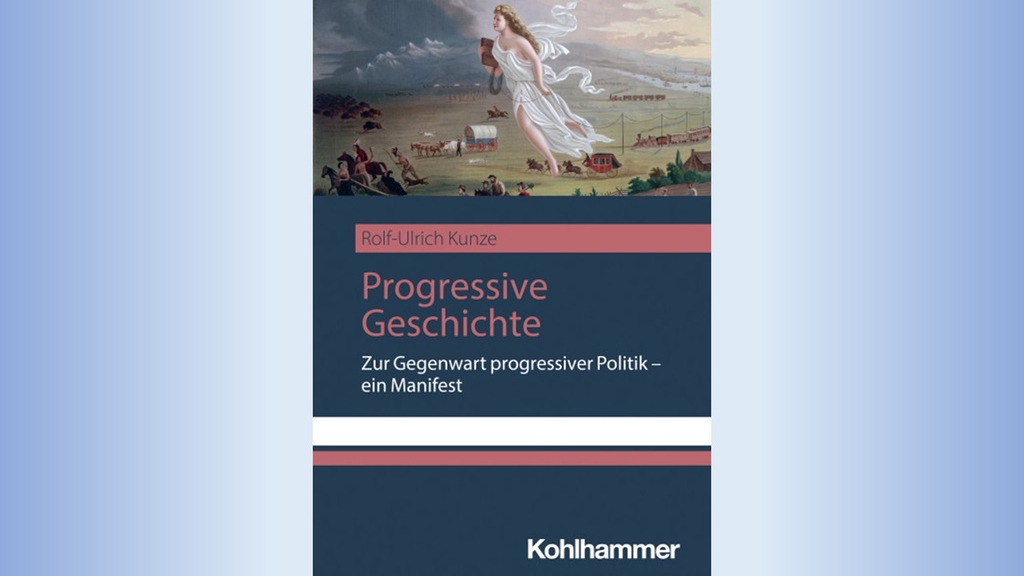
"Modernity" and "progress" have been highly influential concepts in the context of contemporary history. The debate over the ideas and values associated with them has had a lasting impact on political thought and action. At the same time, however, a progressive history also examines the political opportunities of progressivism today—a cross-party position that does not consider the two fundamental values of modernity, freedom and equality, to be a closed chapter—neither in favor of authoritarianism nor of radical individualism. Rolf-Ulrich Kunze’s manifesto sets the characteristics of progressive politics in relation to its current challenges: political history in the literal sense, which does not accept the false claim to neutrality of a thoroughly tangible political or historicist equidistance. (Blurb)
Read more by clicking here
Jennifer Meyer kindly provided participants in the History Colloquium with an insight into the day-to-day workings of the archives. She guided the interested attendees through the State Archives, which they visited together with Marcus Popplow and Désirée Schauz on June 30. During the visit, the group gained insights into the history of the institution as well as specific archival materials. The tour of the restoration workshop was also impressive: using actual exhibits, the staff explained specific techniques for preserving such valuable sources.

Tobias Markowitsch stellte am 16. Juni ein Projekt der Bildungsagenda NS-Unrecht vor. Dieses befasst sich mit den Akten des Sondergerichts Mannheim, welches während der NS-Diktatur Regimekritiker und -kritikerinnen anklagte und in über 8.000 Verfahren in den Jahren 1933 - 1945 verurteilte. Im Rahmen dieses Projektes ermöglichte das Generallandesarchiv Karlsruhe Schülerinnen und Schülern verschiedener Karlsruher Gymnasien, darüber tiefe Einblicke in das Unrechts-System des NS-Staates zu erlangen.

Am 9. Juni stellte Jary Koch (Potsdam) im Forschungskolloquium Auszüge aus seinem Dissertationsprojekt über Arbeit, Technik und Natur in der chemischen Industrie der Bundesrepublik zwischen den 1960er und 1980er Jahren vor. Konkret beleuchtete Koch in seinem Vortrag Aspekte der Computerisierung und Automatisierung der Chemieindustrie und deren Folgen für industrielle Forschung und Produktion.
Events
Zeitgeschichtsschreibung und politische Bildung: Mehr als eine "Bezugswissenschaft"
Geb. 30.91 (Schnabel-Haus), Raum 012, 76131 Karlsruhe

Tim Schanetzky (Essen/Freiburg)
Prof. Dr. Marcus Popplow
Department für Geschichte (KIT)
Karlsruher Institut für Technologie
Neuer Zirkel 3
76131 Karlsruhe
Mail: klaudija ivok ∂does-not-exist.kit edu
https://www.geschichte.kit.edu